
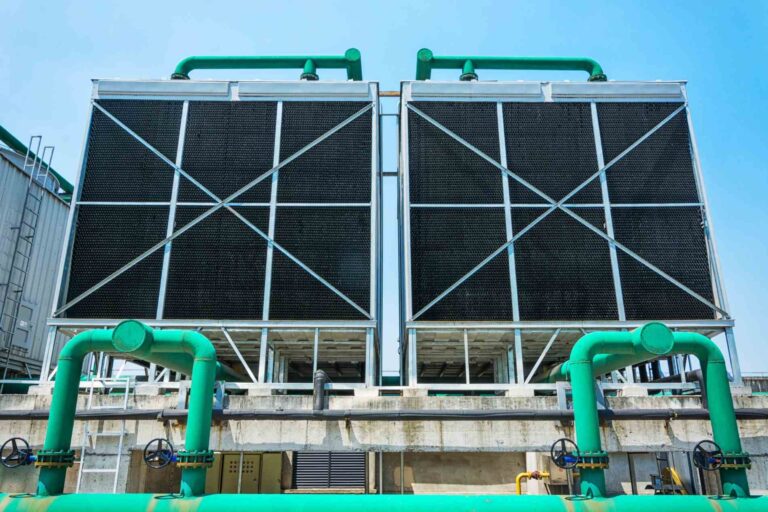
Things to Consider Before Installing a Cooling Tower in Singapore
Multi-storey buildings in Singapore rely on dedicated HVAC infrastructure to maintain comfortable indoor environments year-round. The tropical, humid climate places constant demand on air-conditioning systems and industrial equipment.
Cooling towers in Singapore manage this workload by dissipating heat from circulating water, enabling HVAC systems to operate smoothly without mechanical strain. For building owners planning an installation, selecting equipment involves far more than simply browsing a catalogue.
Crucial factors such as physical placement, material durability, water quality, and long-term maintenance directly govern overall system performance and lifecycle costs.
This guide outlines key pre-installation considerations, system benefits, and local statutory requirements to help you avoid costly operational errors.
Why Cooling Towers Matter in Singapore’s Climate
Due to Singapore’s high ambient heat and humidity, commercial buildings depend on continuous, high-efficiency cooling. While an industrial chiller setup may seem straightforward, cooling towers perform the vital function of removing rejected heat from water loops so air-conditioning units can run efficiently.
If a cooling tower underperforms, the entire building management system suffers reduced efficiency or potential system shutdown during peak cooling demand. Thorough pre-installation planning is just as critical as the physical installation.
How It Works
The heat rejection process is continuous:
- Heat Absorption: Warm water from the building enters the top of the cooling tower.
- Evaporative Cooling: Air passes through the tower, removing thermal energy from the water through evaporation.
- Re-circulation: The cooled water is pumped back into the building to absorb heat again.
Understanding this operational loop helps building managers evaluate engineering proposals and make informed decisions during contractor discussions.
Key Considerations Before Installation
1. Location and Space Availability
Location directly impacts thermal performance. Cooling towers require unrestricted airflow; placing them in tight enclosures or near walls causes hot air recirculation, forcing fans to work harder and increasing energy usage.
Given spatial constraints in Singapore’s commercial districts, building owners must balance installation footprints against required cooling tonnage. Noise attenuation should also be factored into placement to avoid disturbing adjacent occupants.
- Air Intakes & Windows: Position towers away from building fresh-air intakes and operable windows.
- Airflow: Ensure uninterrupted ambient airflow around the unit.
- Structural Load: Verify that rooftop structures or support frames can accommodate wet-operating weights.
- Acoustic Planning: Assess fan and water noise levels relative to nearby residential or office zones.
2. Type of Cooling Tower
Select a tower configuration based on building scale, layout, and operational requirements:
- Crossflow Towers: Air flows horizontally across falling water; easier to inspect and maintain.
- Counterflow Towers: Air flows vertically upwards against falling water; offers a smaller physical footprint.
- Forced-Draught Towers: Blower fans at the base push air through the tower.
- Induced-Draught Towers: Top-mounted discharge fans pull air through the fill media.
Consult a professional mechanical engineer to select the optimal model for your property’s specific cooling load.
3. Water Quality and Treatment
Water chemistry governs thermal efficiency and equipment longevity. Unmanaged water leads to scale accumulation, biofouling, and corrosion, driving up operating costs.
- UV Disinfection: Reduces microbiological growth without relying exclusively on chemical biocides.
- Ozone Systems: Provides high-efficacy organic sanitation.
- Electromagnetic Conditioners: Minimises mineral scaling on heat-transfer surfaces.
- Routine Water Analysis: Identifies chemical imbalances before scale or algae builds up.
Maintaining clean water loops protects chillers, pumps, and pipework across the entire cooling plant.
4. Weather Resistance and Material Selection
Singapore’s humid environment accelerates metal oxidation. Selecting corrosion-resistant materials extends equipment lifespan and lowers lifecycle maintenance costs.
Fibreglass-reinforced plastic (FRP) and heavy-duty galvanised or stainless steel perform exceptionally well in high-humidity conditions. Furthermore, systems must incorporate proper drainage capacity to handle Singapore’s intense tropical rainfall.
5. Lifecycle Costs and Energy Efficiency
Capital expenditure is only a fraction of total ownership cost. Electricity usage, water consumption, and ongoing servicing represent the majority of lifecycle expenditure. An inexpensive, low-efficiency model often incurs higher long-term utility costs than a premium energy-efficient unit.
Always evaluate total cost of ownership (TCO) and request comprehensive quotations that factor in projected utility usage and routine servicing schedules.
6. Maintenance and Service Support
Proactive maintenance prevents unexpected breakdowns and preserves system efficiency.
- Clean fill media and water basins according to a scheduled service plan.
- Inspect fans, drive belts, and motors regularly for wear and vibration.
- Perform monthly chemical and biological water tests.
- Address minor leaks and abnormal mechanical noises immediately.
With consistent maintenance, a quality cooling tower yields a service life of 15 to 20 years. Partner with service providers that guarantee rapid response times and locally stocked spare parts.
Common Mistakes to Avoid
- Delayed Water Testing: Deferring water treatment until scale or algae impairs heat transfer.
- Ignoring Acoustic Impact: Failing to account for noise emissions, leading to tenant complaints.
- Incorrect Sizing: Miscalculating heat loads, resulting in oversized or undersized equipment.
- Prioritising Low Upfront Cost: Choosing cheap equipment over energy-efficient systems with lower lifecycle expenses.
- Regulatory Non-Compliance: Delaying statutory submissions or ignoring National Environment Agency (NEA) guidelines, causing project delays and fines.
Statutory Requirements and Regulatory Approvals
Installing cooling towers or industrial chiller equipment in Singapore requires statutory compliance. Projects must adhere to safety guidelines and obtain clearance from the National Environment Agency (NEA) regarding Legionella control and environmental health standards.
Installations must also comply with relevant Civil Defence (SDF) fire safety codes and structural weight load regulations. Detailed inspection logs and water sampling records must be maintained on-site. Engaging experienced mechanical contractors familiar with local regulatory frameworks ensures smooth authority clearance.
Benefits of a Well-Planned Cooling Tower System
Properly designed and installed cooling towers provide immediate operational advantages:
- Optimised Energy Efficiency: Lower kilowatt consumption due to correct load matching and positioning.
- Operational Reliability: Fewer emergency repairs through proactive preventive maintenance.
- Extended Equipment Lifespan: Reaches 15–20 years of reliable operation.
- Resource Conservation: Reduced water and chemical consumption via optimised dosing.
- Uninterrupted Indoor Comfort: Reliable cooling performance, even during peak tropical ambient temperatures.
Final Thoughts
A successful cooling tower installation involves much more than simply selecting the right equipment. Factors such as location, tower type, water treatment, construction materials, operating costs and ongoing maintenance all influence the system’s efficiency and long-term performance.
Building owners planning to install cooling towers in Singapore should evaluate these factors carefully before making a decision. Proper planning can result in a system that operates more efficiently, lasts longer and requires fewer costly repairs.
It is also advisable to consult experienced specialists such as Leakeong, ask the right questions and establish a maintenance plan from the outset. With the right preparation, building owners can benefit from lower operating costs, fewer unexpected breakdowns and reliable cooling throughout Singapore’s warm climate.
Frequently Asked Questions
Standard cooling tower installations take approximately 5 to 7 working days. Actual timelines vary based on structural readiness, system complexity, and site access.
Basins and fill media should be cleaned every few months as part of a routine maintenance programme. Monthly water quality testing is essential to control biological growth and scale buildup.
With effective water treatment and regular mechanical servicing, high-quality cooling towers operate reliably for 15 to 20 years in Singapore’s climate.
Unmanaged cooling water promotes scale formation, corrosion, and dangerous bacterial growth (such as Legionella). Effective water treatment protects public health, maintains heat-transfer efficiency, and prevents premature equipment failure.
Enquire about their track record with local NEA compliance, after-sales service support, spare parts availability, emergency response times, and warranty coverage. A reputable contractor will provide a comprehensive project schedule and transparent cost estimates prior to work commencement.